Download PDF , by Sophie Barnes

No, we will certainly share you some inspirations concerning how this , By Sophie Barnes is referred. As one of the analysis publication, it's clear that this book will be definitely done greatly. The relevant topic as you need now ends up being the man variable why you ought to take this book. Furthermore, getting this publication as one of analysis materials will enhance you to acquire more information. As understood, more info you will obtain, much more upgraded you will be.

, by Sophie Barnes

, by Sophie Barnes


, by Sophie Barnes


Download PDF , by Sophie Barnes

After couple of time, lastly guide that we and you wait on is coming. So relieved to obtain this excellent book available to offer in this website. This is the book, the DDD. If you still really feel so tough to get the published book in the book store, you can join with us again. If you have ever before got the book in soft documents from this publication, you could easily get it as the recommendation now.

Guides that are presented come from several libraries worldwide. It implies that you will discover the hundreds publications from several authors and also authors from the world. We realize that such individuals will need guide from various other country. If they should invest much money to order and also wait on lot of times, you could obtain different means below. Here, you can easily get the easiest way to link to the book as , By Sophie Barnes straight.

You recognize, as the benefit of reading this , By Sophie Barnes, you might not just get new knowledge. You will feel so enjoyable and also satisfying when reading it. It verifies by the visibility of this book, you can make use of the moment perfectly. Investing the moment when being at house will certainly serve sufficient when you know actually what should do. Reviewing is just one of the most effective means to do to accompany your spare time. Obviously, it will certainly be much more priceless compared to only talking to the other pals.

By starting to read this book asap, you can conveniently locate properly making much better high qualities. Use your leisure time to read this publication; even by pages you can take extra lessons as well as motivations. It will certainly not restrict you in some celebrations. It will release you to constantly be with this publication whenever you will certainly read it. , By Sophie Barnes is currently available here as well as be the initial to get it now.

, by Sophie Barnes

Product details

File Size: 1242 KB

Print Length: 258 pages

Publisher: Sophie Barnes (June 5, 2018)

Publication Date: June 5, 2018

Sold by: Amazon Digital Services LLC

Language: English

ASIN: B07BSXR7XG

Text-to-Speech:

Enabled

P.when("jQuery", "a-popover", "ready").execute(function ($, popover) {

var $ttsPopover = $('#ttsPop');

popover.create($ttsPopover, {

"closeButton": "false",

"position": "triggerBottom",

"width": "256",

"popoverLabel": "Text-to-Speech Popover",

"closeButtonLabel": "Text-to-Speech Close Popover",

"content": '

' + "Text-to-Speech is available for the Kindle Fire HDX, Kindle Fire HD, Kindle Fire, Kindle Touch, Kindle Keyboard, Kindle (2nd generation), Kindle DX, Amazon Echo, Amazon Tap, and Echo Dot." + '
'

});

});

X-Ray:

Not Enabled

P.when("jQuery", "a-popover", "ready").execute(function ($, popover) {

var $xrayPopover = $('#xrayPop_C3BF255C51E611E9B688493A0E2F0B18');

popover.create($xrayPopover, {

"closeButton": "false",

"position": "triggerBottom",

"width": "256",

"popoverLabel": "X-Ray Popover ",

"closeButtonLabel": "X-Ray Close Popover",

"content": '

' + "X-Ray is not available for this item" + '
',

});

});

Word Wise: Enabled

Lending: Not Enabled

Enhanced Typesetting:

Enabled

P.when("jQuery", "a-popover", "ready").execute(function ($, popover) {

var $typesettingPopover = $('#typesettingPopover');

popover.create($typesettingPopover, {

"position": "triggerBottom",

"width": "256",

"content": '

' + "Enhanced typesetting improvements offer faster reading with less eye strain and beautiful page layouts, even at larger font sizes. Learn More" + '
',

"popoverLabel": "Enhanced Typesetting Popover",

"closeButtonLabel": "Enhanced Typesetting Close Popover"

});

});

Amazon Best Sellers Rank:

#4,570 Paid in Kindle Store (See Top 100 Paid in Kindle Store)

Jane Edwards has broken her engagement and traveled to England to do research for a book she wants to write. She is a Regency romance author and this looks like a perfect opportunity to visit. However, she's caught in a thunderstorm and transported two hundred years in the past just as the sister of James, Earl of Camden, is murdered.I probably should stop reading Sophie Barnes books. I've read quite a few with mixed results. I don't care for historicals that don't keep to the rules and context of the times they are written in. Ms Barnes tends to be one of those authors who often disregards the rules of the Regency period. I thought this one might be different because Jane is from the present after all, so some latitude should be fine. But it was ridiculous.James starts by suspecting Jane of the murder but soon hires her as a maid. Of course, she doesn't act like a maid (which is fine for her part), but no one else seems to really notice her irregular behavior or even the fact that's she's American. It doesn't seem to matter in a household where there doesn't seem to be differences between a ladies maid, a downstairs maid, or an upstairs maid maybe, but I found it irritating when the household just accepts that it's fine for Jane to sit and have a brandy at ten in the morning with the Earl. But of course, the Earl also has his sister's former tutor as a house guest which also doesn't seem to raise anyone's eyebrows but makes no sense in that time period.James is so obsessed with Jane that the horrific murder of his sister (her throat was slashed) seems like an afterthought. He certainly doesn't seem very sorrowful and neither did his mother. I also found the maligning of her character after her death to be distasteful; it didn't really add to the plot in my opinion.The book also needed some editing. First, the murder weapon is discovered in a garden but then there is discussion about how the knife hasn't been found. There were other inconsistencies like this that just added to the general sloppiness (almost the second or third page Jane is at King's Cross where she sees the 3/4 platform - Harry Potter fans would note it's 9 3/4).Anyway, this was not a book for me.

I love regency romances! I’ve read many of this author’s books and liked them. This book was an exception. The premise was mildly intriguing - modern woman travels back in time to regency England and falls for Earl. The heroine, Jane Edwards, was hard to warm up to - pretty and adventurous but immature and lacking independence. The hero, James, Earl of Camden, was handsome and aristocratic but stiff. They didn’t have much chemistry and no sizzle. The storyline was really silly and many of the scenes lacked credibility. Overall, a disappointment.

'The Girl Who Stepped into The Past' is a delightful Regency Romance in the time travel venue. It's easy to read, and a good rainy day, or 'time at the beach' book. It's perfect for those reading times when an escape is desired, and the reader needs their own 'time to travel' away from the realities of the day.

Not a very unique plot. Lot of thinking, not much action. Of course, the choice was interesting, but fairly obvious. Always like the premise, but unfortunately left me flat. Some good character development, but plot was too familiar. Have enjoyed other books by this author.

Jane and James, this was five stars plus story...It has it all mystery, love, sensually, murder all the drama into one...She is a dam good author, and knows how a good storyline goes..I will read her again and agine

I have read similar time travel stories, but this is a very well executed story. Interesting without being sappy or too far out of the imagination.

I am a sucker for times-travel romance. This hits both Mike like, reagents romance novels and time travel romance. Great.

I’m looking forward to reading this. I really like time-travel novels.

, by Sophie Barnes PDF
, by Sophie Barnes EPub
, by Sophie Barnes Doc
, by Sophie Barnes iBooks
, by Sophie Barnes rtf
, by Sophie Barnes Mobipocket
, by Sophie Barnes Kindle

, by Sophie Barnes PDF

, by Sophie Barnes PDF

, by Sophie Barnes PDF

Ebook Download How to Stop Smoking and Stay Stopped for Good

Recognizing the way ways to get this book How To Stop Smoking And Stay Stopped For Good is additionally valuable. You have actually been in right site to begin getting this details. Get the How To Stop Smoking And Stay Stopped For Good web link that we supply here and also see the link. You could order guide How To Stop Smoking And Stay Stopped For Good or get it when possible. You could swiftly download this How To Stop Smoking And Stay Stopped For Good after obtaining bargain. So, when you need the book quickly, you can straight get it. It's so simple and so fats, right? You should like to in this manner.

How to Stop Smoking and Stay Stopped for Good

How to Stop Smoking and Stay Stopped for Good


How to Stop Smoking and Stay Stopped for Good


Ebook Download How to Stop Smoking and Stay Stopped for Good

Currently welcome, the most inspiring book today from a very expert author on the planet, How To Stop Smoking And Stay Stopped For Good This is the book that many people on the planet waiting for to release. After the introduced of this publication, guide fans are actually curious to see just how this book is actually. Are you one of them? That's very proper. You might not be remorse currently to seek for this publication to read.

Well, publication How To Stop Smoking And Stay Stopped For Good will certainly make you closer to what you want. This How To Stop Smoking And Stay Stopped For Good will be constantly buddy whenever. You may not forcedly to always finish over reading an e-book basically time. It will certainly be simply when you have extra time and also investing few time to make you feel satisfaction with exactly what you check out. So, you could get the definition of the notification from each sentence in the e-book.

Sooner you obtain the book How To Stop Smoking And Stay Stopped For Good, quicker you could take pleasure in checking out the e-book. It will certainly be your rely on keep downloading guide How To Stop Smoking And Stay Stopped For Good in given web link. This way, you could truly choose that is served to get your very own e-book on-line. Right here, be the very first to obtain the e-book qualified How To Stop Smoking And Stay Stopped For Good and be the very first to recognize how the writer implies the message as well as knowledge for you.

When offering How To Stop Smoking And Stay Stopped For Good as one of the collections of lots of books below, we think that it can be among the very best books noted. It will have numerous fans from all nations visitors. And exactly, this is it. You can really disclose that this book is what we believed in the beginning. Well currently, allow's seek for the various other publication title if you have actually got this book review. You could discover it on the search column that we give.

How to Stop Smoking and Stay Stopped for Good

Product details

#detail-bullets .content {

margin: 0.5em 0px 0em 25px !important;

}

Audible Audiobook

Listening Length: 5 hours and 17 minutes

Program Type: Audiobook

Version: Unabridged

Publisher: Bolinda Publishing Pty Ltd

Audible.com Release Date: October 29, 2008

Whispersync for Voice: Ready

Language: English

ASIN: B001JPMODG

Amazon Best Sellers Rank:

I'm your average long term smoker. Started at 15 and quit at 61 with attempts and fails along the way. Most of us already know the deal health wise, cost, and so on. And most of us have tried any number of things to quit smoking. I ran across this title accidentally and my initial reaction was it was just another of countless quit smoking books. I was wrong. The information in this book seems tailor made for long term smokers. It has a refreshing and realistic approach to quitting. Filled with insight and just good common sense ideas about quitting and so different than the run of the mill ideas. I can't speak for everyone but this book is a breath of fresh air (no pun intended) for those of us who know the drill. It worked for me and I recommend it highly. Good luck. John

If you want to quit, this lady shows you how. She addressed all those situations when it is so easy to fall into the smoking trap, over and over, and over again and shows you how to make the right choice. That is choosing not to smoke. Listen, my smoking friends, no one will do this for you!! This is your time to make the choice not to smoke!! I smoked for almost 40 years and I'm on my way to 5 weeks of being an ex-smoker. I'm doing it and I feel great!!

It's been 5 years now. This is a "Real Deal" book.

Great approach- anyone can use this for any unwanted habit. I hope smokers wishing to quit will read this (I am an overeater and found the principles laid out here so do-able).

Excellent! Excellent Book! This book is easy to ready and makes sense. I would highly recommend it to anyone looking to quit smoking.

It's ok, but I'm still smoking. I guess I'm just not committed yet to quitting. :(

This book didn't help me at all. I did quit smoking w/ the help of e-cigs - a life saver

I listened to the audio version of this book after I had stopped smoking. The book recommends that you listen/read it before you actually quit, and I think this is good advice. I had smoked for approximately 20 years and, while never a heavy smoker (5 per day), I was heavily addicted, nonetheless. This book helped me understand why I stopped with ease when I was pregnant, but went right back to it each time and have never been able to just stop.The fundamental difference this book takes is that, unlike other "quick fix" methods that aim to eliminate your desire to smoke, the author forces you to acknowledge that you desire to smoke. This desire will lessen with time -- but can strike at anytime; therefore, you must develope some techniques for dealing with that desire. She even encourages you to face your desire and temptation head on. If you smoke while commutting or when having drinks with friends -- don't avoid these activities at first -- you are only trying to avoid the desire and then you become afraid of the desire itself. The desire is normal for anyone who has smoked. It's not to be feared, because you alone have the choice of whether to stop smoking or become a smoker again -- which, the author reminds you is a drug addiction that kills or disables at least 50 percent of the people who do it.I have only been stopped for a couple of weeks, but feel very empowered by my choice to stop smoking. I used to say that I smoked because I liked it, and to a degree that is true, but I was also a slave to it and was dishonest with my children when I would be hiding out back while smoking. It feels good to not be a slave to cigarettes or to be lying to my family about it-- even though those things never bothered me before. I feel free and empowered. I still want a cigarette, but I'm not afraid I won't be able to cope with that feeling.Update: 4 and a half years later and I have not smoked a single cigarette. I feel proud of myself and am so happy I made the decision to quit and to use this book as an aid to my quitting because I credit this book for a good amount of the staying success I have had. It has certain chapters near the end that are designed to keep you from starting smoking again by falling into some of the traps that you will face down the road. Slip ups that can turn into a slippery slope of turning into a full-blown smoker again. When I would find myself in one of the scenarios (i.e. telling myself I would just have one cigarette, or if I was out for drinks with my friends I could have one cigarette), I would remember some of the language in this book and know that no, I had already shown myself that I was not capable of being a casual smoker (if such a thing really exists). I agree with the review below that states that this book takes the magic out of stopping smoking. You can do it and you can do it without any gum, patches, pills, etc.

How to Stop Smoking and Stay Stopped for Good PDF
How to Stop Smoking and Stay Stopped for Good EPub
How to Stop Smoking and Stay Stopped for Good Doc
How to Stop Smoking and Stay Stopped for Good iBooks
How to Stop Smoking and Stay Stopped for Good rtf
How to Stop Smoking and Stay Stopped for Good Mobipocket
How to Stop Smoking and Stay Stopped for Good Kindle

How to Stop Smoking and Stay Stopped for Good PDF

How to Stop Smoking and Stay Stopped for Good PDF

How to Stop Smoking and Stay Stopped for Good PDF

Ebook , by Nina Munk

Do you think that , By Nina Munk is a good publication? Yes, we believe so, looking as well as recognizing who the writer of this publication; we will certainly understand that it is an excellent book to check out every time. The writer of this book is incredibly popular in this topic. When someone needs the reference from the subject, they will certainly seek for the details and also data from guides created by this author.

, by Nina Munk

, by Nina Munk


, by Nina Munk


Ebook , by Nina Munk

, By Nina Munk. A job could obligate you to consistently improve the knowledge as well as encounter. When you have no enough time to enhance it directly, you could obtain the encounter and also knowledge from reviewing guide. As everybody understands, book , By Nina Munk is very popular as the window to open the world. It suggests that reviewing publication , By Nina Munk will certainly provide you a brand-new way to locate everything that you need. As the book that we will certainly supply right here, , By Nina Munk

The first reason of why choosing this publication is since it's provided in soft file. It suggests that you can wait not only in one tool however likewise bring it all over. , By Nina Munk will include just how deep the book will certainly use for you. It will certainly give you something brand-new. Also this is only a book; the presence will actually show how you take the inspirations. And also currently, when you actually have to make deal with this publication, you could start to get it.

Now, when you begin to read this , By Nina Munk, possibly you will think of exactly what you can get? Lots of things! Briefly we will certainly address it, however, to recognize exactly what they are, you have to read this book on your own. You understand, by checking out continuously, you can feel not just much better however also brighter in the life. Reviewing need to be served as the routine, as pastime. So when you are meant to review, you could easily do it. Besides, by reading this publication, you could likewise conveniently make ea brand-new method to believe and really feel well and intelligently. Yeah, life wisely and also wisely is much required.

ah, also you do not obtain the most effective excellences from reading this publication; at least you have actually boosted your life as well as efficiency. It is very should make your life better. This is why, why don't you attempt to get this book as well as review it to fulfil your spare time? Are you curious? Juts pick currently this , By Nina Munk in the download link that we provide. Don't wait on more moment, the opportunity currently and also alloted your time to pick this. You can truly make use of the soft data of this publication properly.

, by Nina Munk

Product details

File Size: 9016 KB

Print Length: 274 pages

Publisher: Anchor (September 10, 2013)

Publication Date: September 10, 2013

Sold by: Random House LLC

Language: English

ASIN: B00BVJG2LK

Text-to-Speech:

Enabled

P.when("jQuery", "a-popover", "ready").execute(function ($, popover) {

var $ttsPopover = $('#ttsPop');

popover.create($ttsPopover, {

"closeButton": "false",

"position": "triggerBottom",

"width": "256",

"popoverLabel": "Text-to-Speech Popover",

"closeButtonLabel": "Text-to-Speech Close Popover",

"content": '

' + "Text-to-Speech is available for the Kindle Fire HDX, Kindle Fire HD, Kindle Fire, Kindle Touch, Kindle Keyboard, Kindle (2nd generation), Kindle DX, Amazon Echo, Amazon Tap, and Echo Dot." + '
'

});

});

X-Ray:

Enabled

P.when("jQuery", "a-popover", "ready").execute(function ($, popover) {

var $xrayPopover = $('#xrayPop_0958FBD057B711E99F9400F1A7C706DD');

popover.create($xrayPopover, {

"closeButton": "false",

"position": "triggerBottom",

"width": "256",

"popoverLabel": "X-Ray Popover ",

"closeButtonLabel": "X-Ray Close Popover",

"content": '

' + "X-Ray is available on touch screen Kindle E-readers, Kindle Fire 2nd Generation and later, Kindle for iOS, and the latest version of Kindle for Android." + '
',

});

});

Word Wise: Enabled

Lending: Not Enabled

Screen Reader:

Supported

P.when("jQuery", "a-popover", "ready").execute(function ($, popover) {

var $screenReaderPopover = $('#screenReaderPopover');

popover.create($screenReaderPopover, {

"position": "triggerBottom",

"width": "500",

"content": '

' + "The text of this e-book can be read by popular screen readers. Descriptive text for images (known as “ALT text”) can be read using the Kindle for PC app and on Fire OS devices if the publisher has included it. If this e-book contains other types of non-text content (for example, some charts and math equations), that content will not currently be read by screen readers. Learn more" + '
',

"popoverLabel": "The text of this e-book can be read by popular screen readers. Descriptive text for images (known as “ALT text”) can be read using the Kindle for PC app if the publisher has included it. If this e-book contains other types of non-text content (for example, some charts and math equations), that content will not currently be read by screen readers.",

"closeButtonLabel": "Screen Reader Close Popover"

});

});

Enhanced Typesetting:

Enabled

P.when("jQuery", "a-popover", "ready").execute(function ($, popover) {

var $typesettingPopover = $('#typesettingPopover');

popover.create($typesettingPopover, {

"position": "triggerBottom",

"width": "256",

"content": '

' + "Enhanced typesetting improvements offer faster reading with less eye strain and beautiful page layouts, even at larger font sizes. Learn More" + '
',

"popoverLabel": "Enhanced Typesetting Popover",

"closeButtonLabel": "Enhanced Typesetting Close Popover"

});

});

Amazon Best Sellers Rank:

#548,293 Paid in Kindle Store (See Top 100 Paid in Kindle Store)

The paperback edition of “The Idealist: Jeffrey Sachs and the Quest to End Poverty” was eagerly anticipated. Well, by me, at least. I have spent the past year reading broadly on the topic of economic development. Sachs’s 2005 bestseller, “The End of Poverty,” is by far the most optimistic and prescriptive of the lot. He declared triumphantly in that book: "The wealth of the rich world, the power of today's vast storehouses of knowledge, and the declining fraction of the world that needs help to escape poverty all make the end of poverty a realistic possibility by the year 2025." After serving a year on the ground as an economic development officer in Kandahar, Afghanistan in 2010, I’m skeptical of such sweeping and confident assertions concerning development. Nevertheless, I admired Sachs for the courage of his convictions.According to her own account, author Nina Munk came to this project with an objective, open mind; if anything, she genuinely wanted to believe in the feasibility of Sachs’s grand and noble vision of eradicating poverty in sub-Saharan Africa and beyond. After six years researching this book, however, Munk is no fan of Jeffrey Sachs. In fact, I’m fairly confident she grew to loathe the man. By the end of the book, she dismissively refers to his many op-ed pieces in prominent publications as “jeremiads,” his rapid-fire Twitter feed as embarrassing “screeds,” the man once tenured as a Harvard economics professor at the ridiculously tender age of 28 as a “sawed-off shotgun, scattering ammunition in all directions.”Sachs is a controversial a character; his own book makes that clear. There are only two types of people in the world, according to “The End of Povery”: smart, noble people who agree with and unquestioningly offer their enthusiastic support to Jeffrey Sachs, and ignorant, unprofessional, and painfully misguided buffoons who do not. One of the main themes in “The Idealist” is that Sachs simply does not tolerate dissent, no matter how honestly and innocently voiced. “In effect,” Munk writes, Sachs demands that you “trust him, to accept without question his approach to ending poverty, to participate in a kind of collective magical thinking.” Any criticism or questioning of his vision or approach is reliably met with “…his usual impatience and blind faith,” often ending in cruelly directed scorn and humiliating name-calling, Or, as Munk describes it in one of her rare charitable moments toward the subject of her book: “It’s never easy to disagree with Jeffrey Sachs.”One of the things I like and respect about Sachs is that he brings an entrepreneur’s vision and passion for the cause of poverty alleviation. I’ve lived and worked in Silicon Valley for 15 years and have observed that many legendary tech entrepreneurs (Gates, Jobs, Bezos, Musk, etc.) are famously prickly and impatient with those who fail to see the future that is so clearly visible to them. For these forward thinkers, arguably the genuine geniuses amongst us, “all seems impossible until it becomes inevitable.” They live a different world where “no idea is too far fetched,” which is how Munk describes Sachs.Not too surprisingly, Sachs’s strident criticism of economic-development-business-as-usual has been met with hostility from those who work in that system. Julie McLaughlin, the World Bank’s lead health specialist for Africa, echoes a common sentiment about Sachs, as quoted by Munk in “The Idealist”: “Jeff’s a televangelist, which seems to go over with some people, but I don’t find him all that articulate or charming. I don’t want to be lectured to.” Ah, yes, the lecturing. That’s how most development professionals unfavorably view Sachs’s approach to debate according to the author. “I don’t want to argue with you, Jeff, because I don’t want to be called ignorant or unprofessional,” one development professional is quoted as saying to Sachs in a crowded room after he delivered one of his predictably condescending, didactic, and undiplomatic public speeches on all that is wrong with development work in Africa. “I have worked in Africa for thirty years. My colleagues combined have worked in the field for one hundred plus years. We don’t like your tone. We don’t like you preaching to us. We are not your students. We do not work for you.” The bitterness and (I dare say) hate drip off every sentence. These people – the professionals at USAID, The World Bank, DFID, etc. – have developed a visceral hatred for Jeffrey Sachs. It’s a bug that Nina Munk evidently contracted during her six years on the job.But what really “Hath Sachs Wrought?” He boldly defined a plan to eradicate poverty in the most depressed regions of the world. His ambitious goal: to help get these god-forsaken communities at least onto the first rung of the economic development ladder. His tireless evangelism funded the first phase of his vision to the tune of $120M, most of it from liberal philanthropist George Soros. Sachs’s narrative ensured that outside economic support was only temporary. Once the combined basics of clean water, healthcare, malaria-preventing bed nets, transportation networks and so on were provided for, the local population would pull themselves up by their bootstraps and carry themselves out of poverty and into the twenty-first century as self-sufficient and innovative market capitalists. For many experienced sub-Saharan Africa development practitioners, it all sounded hopelessly naïve, almost farcical. But, again, my view is (and was): why not give it a try? In 2008, I was director of corporate development at Intuit when we paid $170M for Mint.com, an online personal financial management solution that was barely earning $1M a year. The price tag of $120M to test Sachs’s ambitious proposal to eradicate poverty felt shamefully modest.And that’s where this book left me wanting, perhaps because it’s still too early to tell. The author focuses on only two of Sachs’s model “Millennium Development Villages,” one in the badlands of northeastern Kenya, on the parched and lawless border with Somalia, and the other deep in the heart of rural Uganda. Both have experienced mixed results. On the one hand, the self-sufficiency that Sachs predicted was not irrefutably taking hold. On the other hand, pumping millions of dollars into these remote and miserably poor communities obviously had a positive impact: malaria rates were down dramatically; as was infant mortality; more people than ever had corrugated tin roofs over their homes, the African equivalent of a television in every house and two cars in the driveway. But how much of this superficial success is sustainable? Once Sachs and his dollar-rich foundation move on, will these villages be any better off ten or twenty years down the road?The author’s mind is evidently made up. She dismisses even the early success of the project as illusionary. “By 2010 the Millennium Villages Project had become a cumbersome bureaucracy with hundreds of dependent employees,” she writes. “One hundred twenty million dollars and Sachs’s reputation were riding on the outcome of this social experiment in Africa. Was anyone prepared to smash the glass and pull the emergency cord?” But is it really necessary to pull the emergency cord just now, especially given the price tag for Phase 2? When you consider that top hedge fund managers earn over $1 billion (yes, billion) annually, is asking for another $100M that absurd? I realize that Sachs is a polarizing figure. In fact, I’m not particularly predisposed to like him; I’d rather kick him in the shins if I could, to tell the truth. But I’m not convinced that Sachs’s pie-in-the-sky vision has been fully discredited, at least not after reading “The Idealist,” which most certainly sought to discredit the man and his vision. Munk declares unequivocally that Sachs “…misjudged the complex, shifting realities in the villages. Africa is not a laboratory; Africa is chaotic and messy and unpredictable.” I’m 70% confident that she’s correct, although she didn’t make her case nearly as airtight as she evidently thinks she did. The most damning evidence of Sachs’s ill will presented by Munk is that he dismissed the assistance of celebrated MIT economist Esther Duflo to rigorously test the effects of intervention in the MVPs. Sachs evidently rejected such help because it treated global poverty alleviation like “testing pills.” It’s a shame that Sachs isn’t more open to a rigorous and scientific approach to testing his results.I put this book down feeling even more depressed about the fate of sub-Saharan Africa than when I started, which was pretty depressed. The cover photo in the paperback edition shows Sachs surrounded by African villagers. It's a photo well selected by Munk and her editors as it captures perfectly the mix of Sachs's arrogance and ridiculousness that Munk conveys in this book. I just sincerely hope that she isn't nearly as accurate as believes that she is.

Does anyone know how to cure poverty in Africa? Jeffrey Sachs is a very talented economist at Columbia University. This book is about his commitment to raise money and use it to change in three years three different areas in sub Sahara Africa. He is a visionary, and certainly seems driven to help people change their lives and thus become better for the future for themselves and their families and neighbors and friends and relatives. I consider that this was the modern equivalent of what the Bible talks about in teaching a man to fish and thus he can feed himself for a lifetime, vice just feeding hem for the day, which really does not solve his problem in his life. He set up and got funded an expensive and elaborate program to help a small part of Africa as a demonstration for three years. The thought was to integrate it into the area so that it became stand alone for the people and country.The author tracked the program for the three years, and saw the start of many good events that improved peoples lives. However, the programs seemed to create a new set of expectations, and transitioning out of the program when the money stopped was a real issue. In some cases the men were used to being herdsmen, but that way of life could not support them ,and so they needed to change. However the men did not want to change and seemed to consider the new jobs that were available to be beneath their dignity. In other cases, the aid team had a pickup truck to use for their errands. However, some of the people that they were trying to help regarded the pickup truck as something between a taxicab and an ambulance. When a toilet was built, and required periodic maintenance, the maintenance was not done by any of the natives. This was a simple task that the aid team could not get transitioned, and was typical of the issues. Overall, it seemed to me that the assistance was dependent to an overwhelming extent to the members of the aid team.Getting the people to be able to do for themselves was not something that Jeffrey Sachs and his team understood how to accomplish which is really unfortunate. Unfortunately, the basic message that I got is that in general, we in the west to not know how to effectively help the poor people of Africa so that they can help themselves improve their lives. It may not be possible for the good willed people of the west to provide constructive help to the people of Africa. History is full of many efforts with the worlds best intentions, but lousy results. In many cases the money is stolen and used to buy fancy cars like Mercedes or sent out of the country to some officials foreign bank account.A well done but depressing book. Well worth the read if you want to understand aid at a practical level.

, by Nina Munk PDF
, by Nina Munk EPub
, by Nina Munk Doc
, by Nina Munk iBooks
, by Nina Munk rtf
, by Nina Munk Mobipocket
, by Nina Munk Kindle

, by Nina Munk PDF

, by Nina Munk PDF

, by Nina Munk PDF
, by Nina Munk PDF

Free Ebook , by Lee Child

Book, will certainly not always relates to exactly what you should obtain. Bok can likewise remain in some different categories. Faiths, Sciences, socials, sporting activities, politics, legislation, and also many book styles come to be the sources that often you have to check out all. Nonetheless, when you have had the reading routine as well as find out more books as , By Lee Child, you can feel much better. Why? Since, your possibility to read is not only for the need because time however also for continual tasks to always improve and boost your brighter future as well as life quality.

, by Lee Child

, by Lee Child


, by Lee Child


Free Ebook , by Lee Child

How if there is a site that allows you to search for referred book , By Lee Child from throughout the world publisher? Immediately, the website will certainly be extraordinary finished. A lot of book collections can be located. All will be so very easy without challenging thing to relocate from website to website to obtain guide , By Lee Child wanted. This is the site that will give you those assumptions. By following this website you could get great deals numbers of publication , By Lee Child compilations from versions kinds of author and also author prominent in this globe. The book such as , By Lee Child and also others can be gotten by clicking good on web link download.

As a publication, coming with the smart and also careful book is the common one to always bear in mind. It has to choose and pick the most effective words selections or dictions that can affect the top quality of the book. , By Lee Child likewise includes the easy language to be understood by all individuals. When you believe that this publication is proper with you, select it currently. As a great book, it offers not just the characteristics of the books that we have offered.

So, also you require commitment from the company, you might not be perplexed more since books , By Lee Child will consistently aid you. If this , By Lee Child is your ideal companion today to cover your task or job, you could when possible get this publication. Exactly how? As we have actually told recently, just see the web link that our company offer below. The conclusion is not only the book , By Lee Child that you look for; it is how you will obtain numerous books to assist your skill as well as capability to have piece de resistance.

When you truly require it as your source, you can locate it currently and also right here, by locating the web link, you can visit it and begin to get it by saving in your own computer gadget or relocate to other gadget. By getting the link, you will certainly get that the soft documents of , By Lee Child is actually suggested to be one part of your pastimes. It's clear and wonderful sufficient to see you really feel so outstanding to obtain guide to read.

, by Lee Child

Product details

File Size: 1578 KB

Print Length: 433 pages

Publisher: Berkley (November 28, 2006)

Publication Date: November 28, 2006

Sold by: Penguin Group (USA) LLC

Language: English

ASIN: B001NHNG64

Text-to-Speech:

Enabled

P.when("jQuery", "a-popover", "ready").execute(function ($, popover) {

var $ttsPopover = $('#ttsPop');

popover.create($ttsPopover, {

"closeButton": "false",

"position": "triggerBottom",

"width": "256",

"popoverLabel": "Text-to-Speech Popover",

"closeButtonLabel": "Text-to-Speech Close Popover",

"content": '

' + "Text-to-Speech is available for the Kindle Fire HDX, Kindle Fire HD, Kindle Fire, Kindle Touch, Kindle Keyboard, Kindle (2nd generation), Kindle DX, Amazon Echo, Amazon Tap, and Echo Dot." + '
'

});

});

X-Ray:

Enabled

P.when("jQuery", "a-popover", "ready").execute(function ($, popover) {

var $xrayPopover = $('#xrayPop_62405904569B11E996E7746DFC79E645');

popover.create($xrayPopover, {

"closeButton": "false",

"position": "triggerBottom",

"width": "256",

"popoverLabel": "X-Ray Popover ",

"closeButtonLabel": "X-Ray Close Popover",

"content": '

' + "X-Ray is available on touch screen Kindle E-readers, Kindle Fire 2nd Generation and later, Kindle for iOS, and the latest version of Kindle for Android." + '
',

});

});

Word Wise: Enabled

Lending: Not Enabled

Screen Reader:

Supported

P.when("jQuery", "a-popover", "ready").execute(function ($, popover) {

var $screenReaderPopover = $('#screenReaderPopover');

popover.create($screenReaderPopover, {

"position": "triggerBottom",

"width": "500",

"content": '

' + "The text of this e-book can be read by popular screen readers. Descriptive text for images (known as “ALT text”) can be read using the Kindle for PC app and on Fire OS devices if the publisher has included it. If this e-book contains other types of non-text content (for example, some charts and math equations), that content will not currently be read by screen readers. Learn more" + '
',

"popoverLabel": "The text of this e-book can be read by popular screen readers. Descriptive text for images (known as “ALT text”) can be read using the Kindle for PC app if the publisher has included it. If this e-book contains other types of non-text content (for example, some charts and math equations), that content will not currently be read by screen readers.",

"closeButtonLabel": "Screen Reader Close Popover"

});

});

Enhanced Typesetting:

Enabled

P.when("jQuery", "a-popover", "ready").execute(function ($, popover) {

var $typesettingPopover = $('#typesettingPopover');

popover.create($typesettingPopover, {

"position": "triggerBottom",

"width": "256",

"content": '

' + "Enhanced typesetting improvements offer faster reading with less eye strain and beautiful page layouts, even at larger font sizes. Learn More" + '
',

"popoverLabel": "Enhanced Typesetting Popover",

"closeButtonLabel": "Enhanced Typesetting Close Popover"

});

});

Amazon Best Sellers Rank:

#5,793 Paid in Kindle Store (See Top 100 Paid in Kindle Store)

So I am definitely very late to the Jack Reacher universe and just getting around to discovering Lee Child’s novels. I’ve avoided this genre for years as they all seemed kind of formulaic to me. A former military guy who suffers personal loss, has a level of PTSD, drops off the grid and fate puts him in often outlandish situations where he gets to be a hero again. In “Die Trying” which is the second book in this long running series we pick up with Jack Reacher the highly decorated former army Military Police major who has voluntarily separated from the service and essentially has become a rootless drifter. He gets caught up in a kidnapping of a woman picking up her dry cleaning on a busy city street and is abducted as well. Wrong place, wrong time Reacher now has to use his considerable skills to try to get them out alive. Who is the woman, why was she taken? More is revealed when they arrive at their destination in a remote Montana camp and they discover that they’re prisoners of a deranged militia leader and his devoted army of followers. It doesn’t sound very promising but in Child’s hands the 500+ pages fly by and the cliché “can’t put it down” definitely applies. Some of the plot’s more than a bit farfetched but you really get sucked in. Child does make a few technical errors when describing firearms which are surprising given his detailed descriptions of ballistics and the physics of how ammunition works. For instance early on when the couple are kidnapped one of the bad guys points a Glock 17 pistol at him. We than learn Reacher is very familiar with the Glock since while on active duty he was supposedly part of the evaluation team for the Army in selecting a new handgun. First he repeatedly calls semi-automatic pistols “automatics” which is a common mistake authors make. Then he mentions the Glock having the safety off which is wrong as the Glock has no external safety mechanism to be switched off or on. Later on when describing a Barrett Model 90 sniper rifle Child says it is a “50-inch” when he means .50 caliber. A battleship has a 16 inch gun so a 50 inch gun would be really a handful, even for a stud like Reacher. Nitpicking aside “Die Trying” is a great read; 4.5 stars and highly recommended. I just picked up another 5 more and will read the entire series.

The second Reacher adventure, and as usual, pretty gripping stuff. Reacher is in the wroung place when an FBI Agent is kidnapped by extremists-no more information I don,t want to spoil your reading of the lengthy events that follow. Reacher is an ex-MP who spent a fair chunk of his life in the military and as a consequence has acquired a number of useful skills which you and I will never need, but which are a great help in dealing with the ever present bad guys.I don't mind admitting that I've read literally hundreds of books since I got a Kindle-mainly because living in the Czech Republic does limit the choice available in English language .I've got plenty of favourites and Lee Child's books are near the top of my ' to buy' list. Cost does come into the equation-sometimes one has to wait for the cost to subside. This was around eight dollars-ok by me. It's quite a lengthy read, so value for pleasure!

Please know I am a big fan of Lee Child and his Jack Reacher books, but I just didn't like this one. I didn't like the story, I didn't like the other characters, I thought it was too long and drawn out and worse, I had to force myself to finish reading it, which is something I had never done with all the other Reacher books. I must say out of all the Reacher books I have read so far, which were not in release order, I'm glad I didn't start out reading this one as it might have turned me off from the rest which knowing how much I really enjoy the other ones I've read, would have been a shame. I bought this as a package deal with the 1st and 3rd books so I could start at the beginning but I just couldn't get into this particular one. It's not going to deter me from reading all of Lee Child's Jack Reacher books though.

Lee Child has had a successful run with the Jack Reacher series and having just seen the couple movies, I wanted to see where it all started. I started with the first book and while there were some glimmers I was overall pretty disappointed. So many predictable plot turns that I wanted to scream. Unlikely plot and sub-plots with one dimensional characters. It had to get better, right?Die Trying is proof that the series does get better. At least I hope it gets better after this. While this book advances the Jack Reacher character and Lee Child demonstrates a lot more depth as an author, ultimately I just gave up 3/4 of the way through the book as the implausible just became laughable. The villains are treated as masterminds, outwitting authorities and Reacher at every turn and while each new twist and turn is supposed to keep you guessing and on edge, it feels like it's more an attempt to fill pages.There are some moments when this book shines. Jack Reacher battling claustrophobia was written so well that I even found my own heart beating rapidly imagining the moment myself. The rest was mostly engaging until the absurdity became too much.I don't want to give away too much. If you still want to read the book, stop here. If you want to save a few bucks and start later in the series, I will let you know what you missed with the following:WARNING: SPOILER ALERTSSo, our two protagonists have just buried a body and are tired, desperate, seemingly without hope, and...horny? Yes, apparently in some "how to be an author" handbook on Lee Child's shelf, you try to work in at least one sexual encounter no matter the situation. It comes up at such a bizarre time and without any precursor that I was wondering if Mr. Child's adolescent son snuck in to write this page and neither the author nor the editor caught the passage.The militant group seeking to break off and declare independence from the United States has stolen four truckloads of stinger missiles, killing the 20 National Guardsman transporting them and the response (military, federal, or local law enforcement) is....nothing. A small group within the military and FBI is defying presidential orders by ordering its own half-baked rescue/assault effort, which is out-maneuvered at every turn by the crafty separatists.It's pretty common to make the conventional heroes (military, police, etc.) ineffective in one way or another so the novel's hero rise is even more substantial. In this story, the military and FBI do nothing because, well, just because. The already weak story line that the separatists represent a large enough percentage of the population that a military response would unite that segment is coupled with a "what's the worse that could happen" mentality. Okay. I kind of bought into that until they stole stinger missiles and held a small group of marines hostage...and a General and FBI guy...and everybody just sort of acquiesced like, "what else can we do?"Reacher is caught and re-caught in so many instances, I was almost thinking this might be some obscure Army training that dictates when you're not sure what to do, surrender so you have some time to think. Fortunately, there are enough characters with limited intelligence that he will easily be able to escape once again.

, by Lee Child PDF
, by Lee Child EPub
, by Lee Child Doc
, by Lee Child iBooks
, by Lee Child rtf
, by Lee Child Mobipocket
, by Lee Child Kindle

, by Lee Child PDF

, by Lee Child PDF

, by Lee Child PDF
, by Lee Child PDF

Download Ebook A Bride's Story, Vol. 11, by Kaoru Mori

Checking out is sort of need to do every day. Like just what you do your everyday activities, eating or doing your daily activities. And also currently, why should be reading? Checking out, once more, can help you to locate new manner in which will certainly purchase you to life better. That's not exactly what you call as the obligation. You can check out A Bride's Story, Vol. 11, By Kaoru Mori in the extra time as extra activities. It will certainly not likewise obligate you to read it for many pages. Just, by steps and also you could see just how this publication remarkably.

A Bride's Story, Vol. 11, by Kaoru Mori

A Bride's Story, Vol. 11, by Kaoru Mori


A Bride's Story, Vol. 11, by Kaoru Mori


Download Ebook A Bride's Story, Vol. 11, by Kaoru Mori

Have you listed exactly what should you obtain today? Is there any plan and also idea to get the new collection of book? Well, if you have not that kind of strategy, we will certainly influence you and also make sure you to take it in noted. Book is much advised to be constantly in checklist for you. It is type of day-to-day necessity. So, when you allot much money for other requirements, you additionally have to allot some cash to acquire the book.

Reading book A Bride's Story, Vol. 11, By Kaoru Mori, nowadays, will certainly not force you to consistently acquire in the store off-line. There is a wonderful place to buy the book A Bride's Story, Vol. 11, By Kaoru Mori by on-line. This internet site is the best website with whole lots varieties of book collections. As this A Bride's Story, Vol. 11, By Kaoru Mori will certainly be in this book, all publications that you need will be right here, also. Merely look for the name or title of guide A Bride's Story, Vol. 11, By Kaoru Mori You can discover what exactly you are searching for.

And also how this book will assist you? Do you think that you have trouble with similar subject? This is no bother with this. Even you have had the sources to address your problems; this book will complete just what you need. A Bride's Story, Vol. 11, By Kaoru Mori is among guides that that has been created by the trusted author. With the experience, expertise, and also truths that are provided by this publication, it is actually expert.

Merely connect your device computer system or device to the net attaching. Obtain the modern technology to make your downloading and install A Bride's Story, Vol. 11, By Kaoru Mori completed. Even you do not intend to review, you can directly close the book soft file and also open A Bride's Story, Vol. 11, By Kaoru Mori it later. You could likewise quickly get guide anywhere, due to the fact that A Bride's Story, Vol. 11, By Kaoru Mori it remains in your gadget. Or when being in the workplace, this A Bride's Story, Vol. 11, By Kaoru Mori is also recommended to check out in your computer system device.

A Bride's Story, Vol. 11, by Kaoru Mori

About the Author

Kaoru Mori's previous series, Emma, about a maid and a gentleman in Victorian England, has been lauded by Library Journal and was named to the YALSA Great Graphic Novels list. A Bride's Story has only broadened her fan base in Japan and the U.S. with its elegant style and delicate story.

Read more

Product details

Series: A Bride's Story (Book 11)

Hardcover: 192 pages

Publisher: Yen Press (August 20, 2019)

Language: English

ISBN-10: 197538492X

ISBN-13: 978-1975384920

Shipping Weight: 1.7 pounds (View shipping rates and policies)

Average Customer Review:

Be the first to review this item

Amazon Best Sellers Rank:

#68,882 in Books (See Top 100 in Books)

A Bride's Story, Vol. 11, by Kaoru Mori PDF
A Bride's Story, Vol. 11, by Kaoru Mori EPub
A Bride's Story, Vol. 11, by Kaoru Mori Doc
A Bride's Story, Vol. 11, by Kaoru Mori iBooks
A Bride's Story, Vol. 11, by Kaoru Mori rtf
A Bride's Story, Vol. 11, by Kaoru Mori Mobipocket
A Bride's Story, Vol. 11, by Kaoru Mori Kindle

A Bride's Story, Vol. 11, by Kaoru Mori PDF

A Bride's Story, Vol. 11, by Kaoru Mori PDF

A Bride's Story, Vol. 11, by Kaoru Mori PDF

PDF Ebook Embracing Defeat

When obtaining this e-book Embracing Defeat as recommendation to check out, you can get not only motivation however additionally new understanding as well as lessons. It has greater than common perks to take. What kind of book that you read it will be useful for you? So, why must get this book entitled Embracing Defeat in this short article? As in link download, you can obtain guide Embracing Defeat by on the internet.

Embracing Defeat

Embracing Defeat


Embracing Defeat


PDF Ebook Embracing Defeat

Happy vacation! In this holiday, what will you do to fulfil the free time? Have you opt for some outings and also holidays? Well, have you had some books to check out to accompany you when having trips? Lots of people assume that there is no have to bring such publication while having getaways. But, many also always think that reviewing books become a friend in any type of circumstance. So, we will always aim to offer Embracing Defeat as one of analysis products to support and also accompany you in any scenarios.

In reading this book, one to remember is that never worry as well as never ever be burnt out to read. Even a publication will not provide you genuine idea, it will certainly make terrific fantasy. Yeah, you could envision getting the great future. However, it's not just sort of creativity. This is the time for you to make correct suggestions to earn better future. The means is by getting Embracing Defeat as one of the reading product. You can be so eased to review it because it will give much more opportunities and also benefits for future life.

It is also exactly what you will get from getting this book as referral to enhance your high quality and also knowledge. It will certainly show you how kind a publication is. Every sentence and every web page of this Embracing Defeat will show you brand-new point. It will not force you to know or bear in mind all sentences. The most things to always remember is the lesson or message that is informed in this publication.

After getting the web link, it will certainly additionally make you really feel so simple. This is not your time to be puzzled. When the book is accumulated in this web site, it can be got quickly. You could likewise wait in different devices so that you could take it as reading materials any place you are. So now, let's seek for the motivating sources that are simple to obtain. Obtain the different methods from various other to relieve you really feel so easy in obtaining the sources.

Embracing Defeat

Product details

#detail-bullets .content {

margin: 0.5em 0px 0em 25px !important;

}

Audible Audiobook

Listening Length: 21 hours and 38 minutes

Program Type: Audiobook

Version: Unabridged

Publisher: Blackstone Audio, Inc.

Audible.com Release Date: May 3, 2007

Whispersync for Voice: Ready

Language: English, English

ASIN: B000OYD5B8

Amazon Best Sellers Rank:

This is a solid book to understand what happened in Japan In The years immediately after WWII.On the American administration and the Japanese government and the post-war occupation strategy, its excellent. Alos, the analysis of critical statistics of economic production and hunger are also enlighteningI found, however, too much emphasis on the cartoons and poems of that time period, and not a litany of interviews of people who lived through it.Contemporary writers sometimes reflect a national mood, but often do not.I would trusted more the recollections of scores of common people that experienced it.In fact, insightful man in the street reflections (of which there have been many) about how Japanese felt about the war years and the years immediately after (particularly knowledge of atrocities and how it effected people’s National self view) were rather weak.

After reading this book, I can understand why it won a Pulitzer Prize! However, it's not a quick breezy read. I felt like I'd just completed a graduate level course in postwar Japanese history. My father is a WWII infantry combat veteran and my Mother's first husband was an Army Air Force pilot killed in action during the war. When I was growing up, my father wouldn't have been caught dead with either a German or Japanese car in his driveway! I can remember having the book, "The Art of Japanese Management" as assigned reading, during one of my college business courses. At the time, I wondered, how in less that 30 years, the Japanese went from utter defeat and destruction to "required reading" by American students! Take the time to read this book and you'll learn how all that happened....and more. Oh, and as for the car in my dad's driveway....at 94, he just bough a new "Nissan" Rogue.

The fact that there is so much to cover after Japan surrendered to the US is both surprising and unsurprising. Unsurprising because many eras have been extremely well researched. Surprising, because so much changed for Japan in such a short time, and it is all quite interesting.Dower does an excellent job of explaining the thoughts of all sides (and taking to task the stupidities that some people took), and also telling us why people thought of doing these things. He starts with the utter devastation of WWII, explains the economics of the early years and the enormous want right after surrender. People took advantage of the situation, and many felt despair. Dower covers culture, the occupation's goals and thoughts, the "justice" that was imposed, and finally the boom from the Korean War.Dower always keeps a keen eye on explaining things in a way that does not ascribe some special "Japaneseness/Orientalism" that is alien to the rest of the world. This is for the better, as explaining things through "Japaneseness/Orientalism" is hardly an explanation at all. The amazing results of Japan were done through specific circumstances and people being at the correct time to act.Overall, I found the book to be what I wanted -- a great explanation of how Japan "embraced defeat" and started on the path to becoming the nation it is today. Dower clearly explains how this was done. The style is definitely academic, but I never found it dull, and Dower skewers views when they deserve to be skewered. I'd definitely recommend it to anyone interested in Japan.

Book Review: Embracing Defeat: Japan in the Wake of World War II. By John W. Dower. (New York and London: W. W. Norton & Company, Ltd, 1999. Pp 676. ISBN 0-393-04686-9) Embracing Defeat begins where the Pacific War ends. It is a detailed examination of Japan in the aftermath of the war. John W. Dower adroitly leads the reader through the arc of this history as Japan literally rises from ashes at war’s end on August 15, 1945, and then guides us through the US Occupation period and beyond. Rather than a simple chronology, Dower organized his book into sections and topics that focus on the Japanese people, their sufferings, the rationalization of their defeat, and their adjustment to a “New Japan.” Dower’s organization provides the reader insight and sensitivity to the range of difficulties faced by a country devastated by war and left with unimaginable challenges to reconstruct a livable country. Clearly, Dower mastered his subject. The depth of the Japanese plight is borne out in sections with titles like “Shattered Lives,” “Displaced Persons,” “Stigmatized Victims,” and “Mocking Defeat.” Japan, a country that was an industrial power in the 1920s, had become a “fourth-rate nation” by war’s end. (44) And while the allies’ story may be explained in the word victory, Dower digs deep in his account of the diverse opinions, emotions, actions, and motivations held by the Japanese people, brought about by the word defeat. A further example of Dower’s organization is that, although General MacArthur’s name is frequently cited, he is almost never the central figure in the narrative. The view is clearly from and about the Japanese. Perhaps the most enlightening sections of Dower’s work are the first few chapters which focus on the conflicted Japanese people. Japanese culture worshipped the Emperor as Deity, in a way comparable to the worship of Jesus Christ to the Christians. To die for the Emperor was deemed an honor to many. The abrupt end to the war and the devastating defeat was literally and figuratively a bombshell which was universally felt by the Japanese people. When Emperor Hirohito broadcast via radio that the war was over, that the war had been in vain, that Japan had been defeated, it was the first time nearly anyone in Japan had heard his voice. Dower tells us that at the time of Emperor Hirohito’s radio broadcast on August 15, approximately 9.0 million people in Japan were homeless and that “approximately 6.5 million Japanese were stranded in Asia, Siberia, and the Pacific Ocean area.” (47, 48) Although Dower tells us that repatriation was “an impressive accomplishment,” many Japanese returned to a country they hardly recognized. “Many adults who returned after years abroad found that their families had been shattered. Urban neighborhoods had been obliterated.” (57) Many never returned. Returning soldiers were often stigmatized victims, according to the author. Many who had been sent off to war with victory parties and chants of “100 million hearts beating as one,” were frequently viewed as pathetic outcasts. In some respects they had let the Emperor down. Onlookers dubbed their military uniforms as “defeat suits,” their shoes as “defeat shoes.” (170) Outcasts represented a large part of the population and included not only veterans, but the homeless, the hungry. Daily living was as hard as imaginable for the impoverished postwar survivors who received little sympathy. Dower characterizes Japanese culture as a harsh environment for outcasts. He states: “There existed no strong tradition of responsibility toward strangers, or of unrequited philanthropy, or of tolerance or even genuine sympathy…toward those who suffered misfortune.” (61) The US Occupation began in late August and the formal surrender took place aboard the USS Missouri on September 2, 1945. General MacArthur, the Supreme Commander of Allied Forces (“SCAP”) was given unprecedented authority to bring order to chaos. “SCAP’s mission was nothing less than to carry out the demilitarization and democratization of Japan.” (77) While millions of Japanese were homeless and starving, initial SCAP orders seemed insensitive. They were “not [to] assume any responsibility for the economic rehabilitation of Japan or the strengthening of the Japanese economy….The plight of Japan is the direct outcome of its own behavior.” (529) Almost from the beginning though, this order began to soften; it would change dramatically over time. Dower shows us that over the six-year and eight-month US Occupation, the world changed; thus as new conflicts emerged, the relationship between the United States and her allies changed. These unforeseen changes altered the US-Japanese relationship during the occupation well beyond what could have been imagined in 1945. Amidst the human misery that was so visible in Japan in 1945 and 1946, SCAP proceeded with what must be considered a radical agenda for a victorious occupying power—the implementation of democracy and the development of a new Japanese constitution. “The Americans had long looked askance at the Meiji charter, deeming it incompatible with the healthy development of responsible democratic government.” This made the existing charter incompatible with the primary goals of the United States, its allies, and SCAP. (346) Initially, SCAP endeavored to work through an array of influential Japanese to revise the existing charter or encourage development of a constitution that would be consistent with liberal and democratic ideals required by SCAP and the Potsdam Proclamation. Dower discusses in great detail several unsuccessful Japanese attempts toward this end. The author cites that SCAP’s authority to impose a new constitution on Japan could be rationalized by its authority under Section 6 of the Potsdam Declaration, which stated, “There must be elimination for all time the authority and influence of those who have deceived and misled the people of Japan into embarking on world conquest.” Dower intimates that this was interpreted as requiring the establishment of constitutional protections against future abuses of authority. (347) Dower also cites Sections 10 and 12 as other sections of the Potsdam Declaration that supported SCAP’s involvement in the establishment of a new constitution. After several months and seemingly frustrated, MacArthur and his top aides in Government Section [of SCAP] concluded that “the [Japanese] government was incapable of proposing revisions that would meet the Potsdam requirements.” (360) In February 1946 MacArthur ordered that Government Section draft a new constitution for Japan. This bold act, characteristically MacArthur, was an unprecedented act by an occupying power. Produced in secret in order to devise a way to give it Japanese authorship, this draft, with relatively minor changes, ultimately became the new Japanese constitution in May 1947. It was by all accounts an exceptionally liberal constitution which included reforms such as female suffrage, agrarian reform, and a highly controversial “Article 9” which denunciated war. Dower demonstrates in many ways how the relationship between the vanquished Japanese and the allies represented by SCAP began to shift over time. The most notable of several examples was caused by the emerging Cold War. Initially, SCAP sought to foster reconstruction of Japan on a lesser economic scale and Section 9 forced demilitarization. But as Dower explains, “Driven by Cold War considerations, the Americans began to jettison many of the original ideals of ‘demilitarization and democratization’ that had seemed so unexpected and inspiring to a defeated populace in 1945.” (525) Instead of breaking up big business and prosecuting prominent capitalists and bureaucrats, as Cold War fever mounted, Americans sought to reinvigorate the economy with Japan ultimately viewed as a first line “bulwark against communism.” In the vernacular of the times, this dramatic change was referred to as the “reverse course.” When the Korean War erupted on June 25, 1950, Japan and its US Occupation forces were nothing less than an asset against communist aggression. Moreover, the period leading up to the war saw the revitalization of key heavy industrial expansion in Japan which proved a boon to her economy. Dower tells us that during the Korean War period, American “special procurements” from Japan amounted to billions of US dollars in Japanese exports. These purchases continued for years after the end to the Korean War. Dower states: “This prolonged windfall enabled Japan to increase its imports greatly and virtually double its scale of production in key industries.” (542) Embracing Defeat is a most important contribution to modern Japanese history. On one hand it can be viewed as a capstone to Pacific War history for it does provide an insightful epilogue to the war. In another sense this work provides a genesis to the Japanese Miracle because it ends just as Japan, Inc. is acquiring its economic footing. Dower’s ability to aptly organize his abundant scholarship into very readable prose is also noteworthy. The book belongs on the shelf of any serious student of Japan, or for that matter, any serious student of twentieth-century history.

Embracing Defeat PDF
Embracing Defeat EPub
Embracing Defeat Doc
Embracing Defeat iBooks
Embracing Defeat rtf
Embracing Defeat Mobipocket
Embracing Defeat Kindle

Embracing Defeat PDF

Embracing Defeat PDF

Embracing Defeat PDF

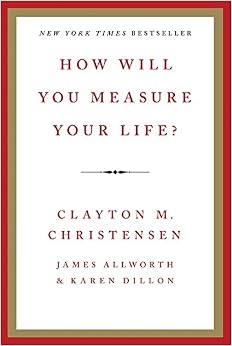
Ebook How Will You Measure Your Life?, by Clayton M. Christensen James Allworth

However, this is not kind of sacral advice. Book can help you fix and also from the problem, but, it cannot determine just how you will solve it. It will certainly not give you the guarantee. You are the one that should take it. When taking the book excels method, it will certainly count on be nothing when you do not read it well. Having How Will You Measure Your Life?, By Clayton M. Christensen James Allworth will certainly imply nothing when you can't utilize the web content and also learning from this publication.

How Will You Measure Your Life?, by Clayton M. Christensen James Allworth

How Will You Measure Your Life?, by Clayton M. Christensen James Allworth


How Will You Measure Your Life?, by Clayton M. Christensen James Allworth


Ebook How Will You Measure Your Life?, by Clayton M. Christensen James Allworth

Will reading habit influence your life? Several say yes. Checking out is a great routine; you could create this practice to be such interesting method. Yeah, checking out habit will not only make you have any much-loved activity. It will be among assistance of your life. When reading has actually come to be a practice, you will not make it as troubling activities or as boring task. You can obtain several benefits and relevances of analysis.

When you feel hard to get this book, you can take it based on the link in this write-up. This is not just about just how you get the book to read. It is about the essential point that you can collect when being in this world. How Will You Measure Your Life?, By Clayton M. Christensen James Allworth as a fashion to recognize it is not offered in this internet site. By clicking the link, you could discover the new book to review. Yeah, this is it!

Recognizing the means how you can get this book How Will You Measure Your Life?, By Clayton M. Christensen James Allworth is additionally useful. You have actually been in appropriate website to begin getting this details. Get the How Will You Measure Your Life?, By Clayton M. Christensen James Allworth web link that we supply right here as well as see the web link. You can get the book How Will You Measure Your Life?, By Clayton M. Christensen James Allworth or get it when feasible. You could promptly download this How Will You Measure Your Life?, By Clayton M. Christensen James Allworth after getting deal. So, when you require the book promptly, you can straight receive it. It's so easy therefore fats, right? You have to prefer to through this.

Making certain, many individuals likewise have downloaded the soft file of How Will You Measure Your Life?, By Clayton M. Christensen James Allworth though this website. Just by clicking web link that is given, you could go directly to guide. Once more, this publication will certainly be actually vital for you to review, even they are straightforward, and also they will lead you to be the far better life. So, what do you think of this upgraded book collection? Let's check it currently and prepare yourself to earn this publication as definitely your collection and reading products. Think it!

How Will You Measure Your Life?, by Clayton M. Christensen James Allworth

Review

“[A] highly engaging and intensely revealing work….Spiritual without being preachy, this work is especially relevant for young people embarking on their career, but also useful for anyone who wants to live a more meaningful life in accordance with their values.” (Publishers Weekly)“The book encapsulates Christensen’s best advice to keep high achievers from being disrupted in their own lives....[P]rovocative but reassuring: Peter Drucker meets Mitch Albom.” (Bloomberg Businessweek)“[M]ore genuinely a self-help book than the genre it disparages. Instead of force-feeding readers with orders on how to improve, it aims to give them the tools to set their own course” (Financial Times)“[W]ell researched and thought through material. (Forbes)“…a gripping personal story with lessons from business mixed in.” (Bloomberg BusinessWeek)“…Clayton Christensen’s new book has the business world buzzing.” (Deseret News)“Recommend the book to friends and family who have no connection to the business world. They will thank you for it.” (Harvard Business Review)‘’A Business Student’s New Required Reading’’ (Huffington Post)“[R]evealing and profound.” (Inc. Magazine)“I wish this book was around when I started my carreer. I bought copies for my kids and other young adults I know. $16 is not a lot to spend to get them thinking about their future and how to live responsible, ethical and successful lives.” (Small Business Labs)

Read more

From the Back Cover

In 2010 world-renowned innovation expert Clayton M. Christensen gave a powerful speech to the Harvard Business School's graduating class. Drawing upon his business research, he offered a series of guidelines for finding meaning and happiness in life. He used examples from his own experiences to explain how high achievers can all too often fall into traps that lead to unhappiness.The speech was memorable not only because it was deeply revealing but also because it came at a time of intense personal reflection: Christensen had just overcome the same type of cancer that had taken his father's life. As Christensen struggled with the disease, the question "How do you measure your life?" became more urgent and poignant, and he began to share his insights more widely with family, friends, and students. In this groundbreaking book, Christensen puts forth a series of questions: How can I be sure that I'll find satisfaction in my career? How can I be sure that my personalrelationships become enduring sources of happiness? How can I avoid compromising my integrity—and stay out of jail? Using lessons from some of the world's greatest businesses, he provides incredible insights into these challenging questions. How Will You Measure Your Life? is full of inspiration and wisdom, and will help students, midcareer professionals, and parents alike forge their own paths to fulfillment.

Read more

See all Editorial Reviews

Product details

Hardcover: 240 pages

Publisher: Harper Business (May 15, 2012)

Language: English

ISBN-10: 0062102419

ISBN-13: 978-0062102416

Product Dimensions:

5.5 x 0.8 x 8.2 inches

Shipping Weight: 10.4 ounces (View shipping rates and policies)

Average Customer Review:

4.6 out of 5 stars

766 customer reviews

Amazon Best Sellers Rank:

#8,575 in Books (See Top 100 in Books)

Harvard professor and best-selling author (“The Innovators Dilemma,” “The Innovators Prescription,” “Disrupting Class,” and more), Clayton Christensen observed that many of his classmates, despite many accomplishments, were clearly unhappy with their lives. Divorce and the deterioration of many personal relationships were symptoms of something that had seriously gone awry with their lives.With this as a backdrop, Christensen began to challenge his graduating students with three simple questions to examine, measure, and improve their lives after Harvard:1. How can I be sure that I will be successful and happy in my career?2. How can I be sure that my relationships with my spouse, my children and my extended family and close friends become an enduring source of happiness?3. How can I be sure that I live a life of integrity – and stay out of jail? (Enron’s Jeff Skilling was in Christensen’s class at Harvard.)“How Will You Measure Your Life?” emerged from this encounter with students. In it, Christensen asks the critical questions and provides a guide about how to think about life, one based on a deep understanding of human endeavor – what causes what to happen, and why. This he believes will help us with decisions we make every day in our lives – decisions that will help us avoid bad outcomes, unhappiness, and regret.Christensen uses business case studies throughout the book. He draws from these to provide a philosophy for life that offers real success.The starting point is a discussion of priorities - finding happiness in your career, finding happiness in your relationships and staying out of jail - so we can avoid the trap of giving-in to the inner voice that screams the loudest. Christensen’s wants to help you wake up every morning thinking how lucky you are to be doing what you’re doing.“How Will You Measure Your Life/” will help you build a strategy to do exactly that.On career happiness, Christensen warns that compromising on the wrong career path (for fame, money, power) is a cancer that will metastasize over time. What matters most is making sure our jobs are aligned with what really makes us happy. Motivation is much less about external prodding or incentives and much more about what’s inside of you and whether the work is challenging, provides for personal growth, responsibility, recognition, and sense that you are making a meaningful contribution.Money is not the root cause of unhappiness but becomes a problem when it supersedes everything else. (One friend of mine commented that when he left Wall Street as a well-known healthcare stock analyst to an executive role in a major healthcare firm that he was surprised to find that people really at this firm were not motivated by income but rather, were focused on reducing mortality and improving lives. The only thing he said that mattered on Wall Street was how much money you made!)“Before you take that job:• Carefully list the things that others are going to need to do or deliver in order for you to successfully achieve what you hope to do for yourself.• What assumptions have to prove true for you to be happy in the choice you are contemplating?• Are you basing your position on extrinsic or intrinsic motivators?• Why do you think this is going to be something you enjoy doing?• Think about the most important assumptions that have to prove true? How can you swiftly and inexpensively test if they are valid. What evidence do you have?”On personal relationships, Christensen notes from his observations and personal experience that the relationships you have with family and close friends are going to be the most important sources of happiness in your life. “You have to be careful. When it seems like everything at home is going well, you will be lulled into believing that you can put your investments in these relationships onto the back burner. That would be an enormous mistake. By the time serious problems arise in those relationships, it is often too late to repair them. The paradox is that the time when it is most important to invest in building strong families and close friendships is when it appears, at the surface, as if it is not necessary.”He warns that a common mistake made by both men and women is to believe we can invest in life sequentially. I have seen this many times…career is first, marriage is second, and children are relegated to third. The problem is made worse today with so many two income families. While each relationship needs to be routinely nourished and refreshed, we end up putting relationships on the back-burner because we are busy and preoccupied with less important things of life. We end up neglecting the people we care most about in the world. Without focus, we lose out on those rich and deep personal relationships that are the essence of life.To succeed with relationships, Christensen asks us to think about the job we were “hired” to do – as a spouse, as a parent, as a friend. “The path to happiness (in relationships) is about finding someone who you want to make happy, someone who’s happiness is worth devoting yourself to…I have observed that what cements that commitment is the extent to which I sacrifice myself to help her succeed and for her to be happy. Sacrifice deepens our commitment. It applies to all of our relationships.”Christensen notes that our role as parents is to prepare our children for the future. The tragedy of today’s culture is that we are outsourcing parenting to other relatives, nannies, schools, and extracurricular activities. We have lost sight of the importance of our time - the greatest gift we can give another person. Investing our time in another is a sign of respect and love. It provides a clear signal to others as to what is most important in your life.Creating a healthy family culture is hard work and requires an investment of self and time. Marriages are the merging of two cultures. Each family should choose a culture that’s right for them. This entails choosing activities to pursue, and outcomes to achieve. With time, family members will be on auto-pilot thinking “this is how we do it.” Culture development cannot be outsourced. It is doing things together – working in the yard, fixing the house, camping, homework, family sporting events, table games, cooking, etc. – to show our children how to love work, how to solve problems, how to prioritize and what really matters. Culture happens whether you want it to or not. The only question is how much you will influence it.On staying out of jail, Christensen warns against marginal thinking. It applies to choosing right and wrong. We are presented with moral challenges throughout life. When we think about doing something “just this one time” because the marginal cost appears to be negligible, we get suckered in. We don’t see where that path will ultimately take us nor do we appreciate the full cost of the choice. It could be one of many things – misrepresenting expenses or revenues, stuffing a distribution channel, insider trading, a small bribe to gain business, the use of drugs. The landscape is littered with people who never gave a thought to crossing the line “just this once,” thinking they would never get caught.Doing the right thing 100% of the time is easier than 98% of the time. If we break our own rules just once, we can justify the small choices again. Using marginal cost thinking to justify all the small decisions lead up to a big one. Then, the big one does not seem enormous anymore; it is just another incremental step. The only way to avoid the consequences of uncomfortable moral concessions in your life is to never start making them in the first place. When the first step down that path presents itself, turn around and walk the other way.”“The danger for high-achieving people is that they will unconsciously allocate the resources to activities that yield the most immediate, tangible accomplishments. They become accustomed to allocating fewer and fewer resources to the things they would say matter most. They are investing in lives of hallow unhappiness.”To avoid the pitfalls of creating hollow unhappiness, it is imperative that we define our purpose. The three parts of purpose are: establishing a direction (career, relationships, and staying out of jail) with milestones to mark our progress; making a deep, unwavering commitment to achieving the milestones; and using metrics to mark progress. The world will not deliver a cogent and rewarding purpose to you.What is the type of person you want to become?What is the purpose of your life? Is that important to you?Is it something you want to leave to chance?"How Will You Measure Your Life?"

If you feel you've lost your wayHow will you measure your life? How to reach fulfillment.While there is no one shoe fits all answer for everyone, there are various insights within these pages that a multitude can benefit from. Though humans are unique in their own special way, we share similar experiences. The author has used his life and the lives of others as a base point, gathering lessons in the hope that they will benefit you on your life's journey: providing you with the knowledge to live and have the best possible life ever._The book starts off with helping readers to understand what's important in our lives and how we should prioritize our actions, thoughts and resources to that purpose rather than aimlessly and passively floating along. How can we Achieve our goals or contribute to our happiness without implementing ourselves to that cause? We must act on what makes us tick, no ones going to give it to us.-It continues to speak on fulfillment in careers, families, and happiness in relationships.

I loved reading this book so much, bought it for my coworker. Definitely a book you will need to reference for career, marriage, relationships, and life in general to to teach you theories so you know how to measure your happiness so you don’t make mistakes & settle in life.I love the personal stories the author shared with his own life and what he learned to help many of us so we can prove these theories before accepting a new job offer or settling for the wrong relationship. Wish this professor taught this in my school years ago, but at least I learned now.

Professor Clayton Christensen is my favorite business writer. He take business and high sounding economic terms and dissect them to the practical understanding of the layman. Following in the paths of his other best selling and highly elucidating books on innovation and other subjects, this book is to say the least, not disappointing at all.Even though life is not all about business, he (and the co-authors) has severally used simplified and yet highly practical language to propose what should and ought to be the most important measure and approaches to life in general. A highly enlightening book, readers will not be disappointed.Among other topics, the authors explained how readers can use what they called the deliberate (or planned) and emergent strategy to discover what their life's purpose, goal, pursuits and what might eventually work for them in life. The likelihood of the success of any of these strategies been tested along the way with the statement, “What has to prove true for this to work? ”Going further, according to them, people in all cadres of life can use the theory of full costs and marginal costs in taking decisions that have overreaching long or short term repercussions in business and in situations that call for moral choices. They explained that, "The marginal cost of doing something “just this once” always seems to be negligible, but the full cost will typically be much higher. Yet unconsciously, we will naturally employ the marginal cost doctrine in our personal lives. A Voice in our head says, “Look, I know that as a general rule, most people shouldn’t do this. But in this particular extenuating circumstance, just this once, it’s okay.” And the voice in our head seems to be right; the price of doing something wrong “just this once” usually appears alluringly low. It suckers you in, and you don’t see where that path is ultimately headed or the full cost that the choice entails."This book did not set out to just simply teach us morals. But, in our world and times where people see morals as relative, I find the authors' emphasis in this area towards the end of the book a highly reassuring guide.Among other things, my take home from this book is:Never lower your morals in other to please others or meet their expectations. Do not debase yourself or go contrary to what you know to be your true inner convictions and what is the right thing to do. Why? This is because, according to the authors, it is easier to stay true to your convictions 100% of the time than it is to stay true to them 98% of the time. Why is this so? This is because, you never can tell where or how far you will go down the drain after that first, initial, "Just this one time only" act of compromise.--------------------------------------------------------All quotations & brief excerpts are from: Clayton M. Christensen, James Allworth, Karen Dillon; How Will You Measure Your Life?©Harper Business, 2012

How Will You Measure Your Life?, by Clayton M. Christensen James Allworth PDF
How Will You Measure Your Life?, by Clayton M. Christensen James Allworth EPub
How Will You Measure Your Life?, by Clayton M. Christensen James Allworth Doc
How Will You Measure Your Life?, by Clayton M. Christensen James Allworth iBooks
How Will You Measure Your Life?, by Clayton M. Christensen James Allworth rtf
How Will You Measure Your Life?, by Clayton M. Christensen James Allworth Mobipocket
How Will You Measure Your Life?, by Clayton M. Christensen James Allworth Kindle

How Will You Measure Your Life?, by Clayton M. Christensen James Allworth PDF

How Will You Measure Your Life?, by Clayton M. Christensen James Allworth PDF

How Will You Measure Your Life?, by Clayton M. Christensen James Allworth PDF